Sleep, stress management, stretching and proper nutrition are all essential parts of recovery, and ultimately proper recovery is the foundation of peak performance. In other words, the better you recover, the better you perform.
If you’ve ever wondered why you feel like crap after a workout, or why, when you’ve been coming religiously to the gym you don’t feel like you’re improving, your recovery practices (or lack of) may be to blame.
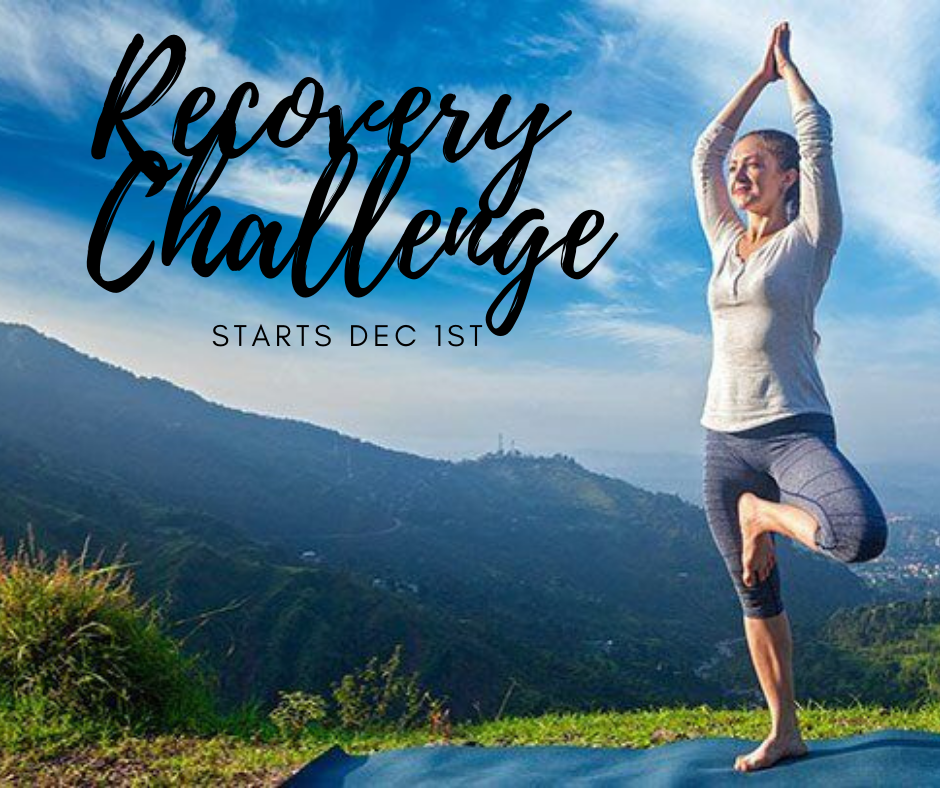
For the month of December (traditionally a stressful month for people) I am running a FREE recovery challenge that will incorporate rest, recovery, and resilience with the hope of helping participants see the importance of recovery in optimizing performance.
Sleep (REST)
Poor sleep can affect us physically, emotionally and mentally, so getting enough sleep (7-9 hrs for adults) is essential for optimal recovery. “Sleep hygiene” is a fancy phrase for good bedtime habits. Some of these habits include:
- Getting regular exercise
- Getting natural sunlight during the day
- Keeping your bedroom cool, dark and comfortable
- Avoiding caffeine, alcohol and nicotine around bedtime
- Avoiding screens and digital devices in the bedroom (if your phone is your alarm clock, make sure it is silenced so there are no noises or lights during sleeping hours)
- Avoid eating within 1 hour of going to bed
- Avoid exercise within 1 hour of going to bed
- Set a regular sleep schedule and stick to it even on weekends
- Stress management techniques (see stress management section)
Physical recovery
When most athletes think of recovery, they think massage, ice baths or stretching. These are all great techniques that will be incorporated here, but I want to introduce nutrition for recovery as well. Inadequate nutrition for athletes can result in increased fatigue, reduced performance, suboptimal gains, and increased DOMS (delayed onset muscle soreness).
Here are some nutrition ideas for recovery:
- Protein: Post exercise protein increases muscle synthesis and repair.
- Women-eat 1 palm sized portion (20-30g) of protein within 1 hour after exercise.
- Men-eat 2 palm sized portions (40-60g) of protein within 1 hour after exercise.
- Carbohydrates: The body’s glycogen stores are used during exercise and must be replenished. Aim for 0.5g carbohydrate per pound body weight as soon as possible after exercise, ideally within 2 hours.
- Fat: Post exercise fat consumption reduces inflammation produced during exercise. Aim for 1-2 Tbsp of Omega 3 rich fats (nuts, seeds, grass-fed beef, fish, olive and avocado oil) within 1 hour after exercise.
- Hydration: Aim for half your body weight in ounces of water. Electrolytes (sodium, chloride, calcium, magnesium, and phosphate) are lost when we sweat which throws our fluid/electrolyte balance off and can cause muscle cramping and impaired performance.
Here are some non-nutrition ideas for recovery:
- Massage
- Stretching
- Foam rolling
- Hydrotherapy (Ice bath, hot bath with epsom salts, sauna)
Stress Management (RESILIENCE)
We can’t always control stressors in our lives, but we can control how we react to these stressors. This is called stress resilience. Everyone is different and there are a wide variety of stress management techniques, so play around with a few of these ideas and see what works for you! Here are some ideas to get you started:
- Figure out your stress triggers and avoid them.
- Mindful or guided meditation (you can use an App like Headspace or Calm to guide you).
- Deep breathing
- Progressive muscle relaxation:
- While inhaling, contract one muscle group (for example your upper thighs) for 5 seconds to 10 seconds, then exhale and suddenly release the tension in that muscle group.
- Give yourself 10 seconds to 20 seconds to relax, and then move on to the next muscle group (for example your buttocks).
- While releasing the tension, try to focus on the changes you feel when the muscle group is relaxed. Imagery may be helpful in conjunction with the release of tension, such as imagining that stressful feelings are flowing out of your body as you relax each muscle group.
- Gradually work your way up the body contracting and relaxing muscle groups.
- Relaxing music
- Forest bathing (aka a walk in the woods
)
- Counseling
 Live Well Nutrition Coaching